Team games do not establish teamwork on their own
While corporate literature routinely attributes enhanced collaboration and psychological safety to structured parlour games, empirical workplace evidence remains modest, suggesting that artificial exercises often produce compliance rather than genuine organizational trust.
Four formats with different demands
Group facilitation broadly separates into four distinct procedural structures, each imposing unique cognitive, social, and biomechanical burdens on participants while offering widely disparate transferability to everyday work.
-
01
Introductions without forced disclosure
Icebreaker exercises such as Two Truths and a Lie or Human Bingo presuppose that sharing autobiographical trivia creates relational safety, whereas individuals frequently report discomfort when prompted to display personal anecdotes before unvetted peers.
-
02
Cooperation under shared rules
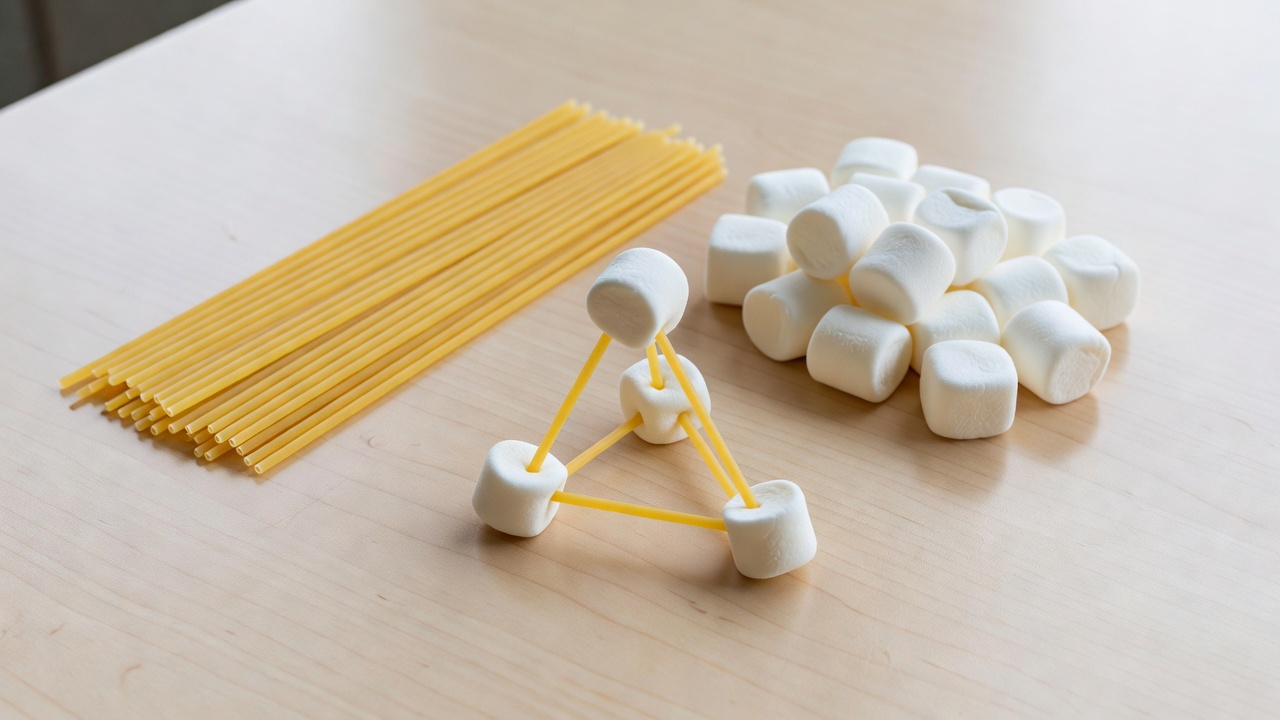
Tabletop problem-solving tasks, including Peter Skillman’s Marshmallow Challenge or tabletop jigsaw puzzles, highlight immediate role differentiation, but facilitators often misread rapid iteration within artificial constraints as proof of transferable strategic foresight.
-
03
Movement with alternatives
Physical games ranging from non-contact Ultimate disc drills to relay variations routinely exclude colleagues with invisible physical limitations, sensory sensitivities, or chronic fatigue unless structured with non-motor observation and strategy roles from the outset.
-
04
Debriefs without inflated conclusions
The reflective wrap-up frequently serves as a rhetorical exercise where consultants coach participants to state that paper towers illustrate quarterly alignment, rather than examining whether the exercise revealed genuine procedural bottlenecks or mere compliance.
Questions before a facilitator chooses
Facilitators must interrogate the unstated premises of popular exercises before mandating them for assembled teams. These three questions highlight the divergence between promotional literature and participant realities.
Does completing an icebreaker reliably increase psychological safety?
Why do kindergarteners frequently outperform executives in the Marshmallow Challenge?
Can game behaviour predict how an employee will act during a high-stakes crisis?
Review all eight facilitator inquiries on the Claim Questions page →
Participation costs beside intended aims
Before investing collective operational hours in standard team-building catalogue items, organizers ought to contrast the vendor’s stated ambition against the actual socio-cognitive tax extracted from attendees.
| Activity Format | Stated Pedagogical Aim | Actual Participant Tax | Sensible Modification |
|---|---|---|---|
| Autobiographical Icebreakers (Human Bingo) | Rapid social connection across departmental hierarchies. | Social anxiety, invasive disclosure pressure, exclusion of introverted or guarded staff. | Shift focus to professional workflow curiosities or opt-in object-based trivia. |
| Iterative Construction (Marshmallow Challenge) | Experiential understanding of agile prototyping and prototyping speed. | Status-seeking paralysis, acute frustration, disproportionate shame over structural failure. | Frame the task purely as an engineering experiment with mandatory intermediate tests. |
| Kinesthetic Drills (Ultimate Disc & Relays) | Shared physical vitality and release of cognitive fatigue. | Physical exclusion, biomechanical risk, competitive resentment among athletic disparities. | Offer concurrent strategy, scorekeeping, and non-motor design responsibilities. |
| Metaphorical Debrief (Closing Circles) | Translating game outcomes into operational workflow principles. | Manufactured consensus, scripted corporate platitudes, dismissal of actual grievances. | Solicit written, anonymous critiques of process mechanics rather than forced vocal praise. |
Facilitation prerequisites checklist
Before deploying any group activity across a diverse workgroup, verify whether the operational context meets the following criteria:
- Universal opt-out mechanism: Participants can decline without providing medical reasons, forfeiting compensation, or incurring social stigma.
- Non-extractive inquiry: Prompts never demand disclosure of family background, romantic status, financial history, or personal trauma.
- Motor-neutral alternatives: Any spatial movement exercise provides equal, respected roles for seated observers and analytical monitors.
- Direct boundary attribution: The facilitator explicitly acknowledges that winning or losing the game offers zero indication of moral worth or occupational competence.